English| USD
Suggested for you
More currencies
Choose a language
The 390-kilometer stretch between Cusco and Puno crosses the Altiplano through high-altitude valleys, colonial towns, and pre-Inca archaeological sites. Three transport modes serve the route—tourist buses with guided stops, PeruRail's luxury train, and private transfers—each suited to different priorities. This guide maps the logistics, durations, and tradeoffs.
Quick answer
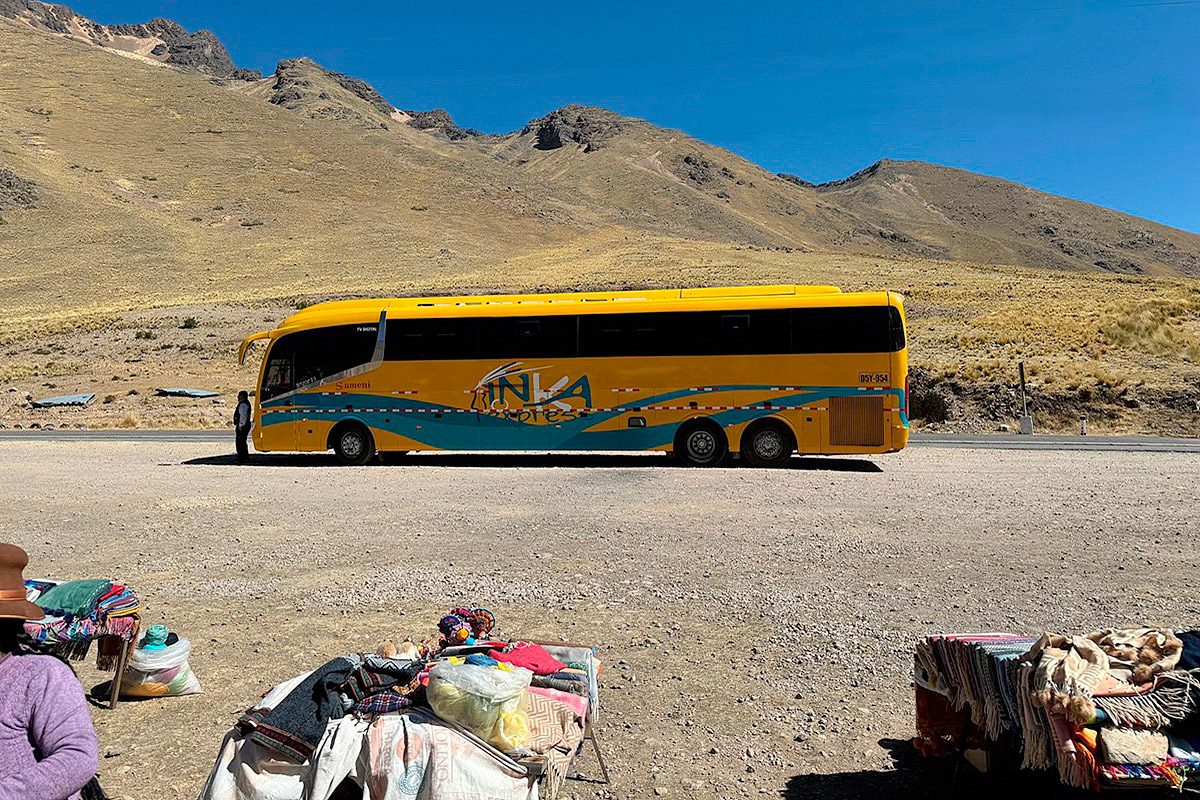
Tourist buses operate daily from 08:30 to 17:30 along the Ruta del Sol corridor, stopping at Andahuaylillas, Raqchi, La Raya Pass, and Pukara en route to Puno. The journey takes 10 hours with guided stops included. PeruRail's Titicaca train runs four days per week in high season with onboard lunch and panoramic windows, completing the route in the same duration. Private transfers skip the stops and finish in seven hours.
The Ruta del Sol corridor climbs to 4,335 meters at La Raya Pass before descending into the Lake Titicaca basin—a geographic transition that defines the journey between Cusco and Puno. Most travelers choose the tourist bus for its combination of transport and cultural immersion, but the decision hinges on whether you prioritize guided stops, comfort, or speed. Tourist buses depart Cusco between 08:30 and 09:00, following the paved highway through Andahuaylillas to visit the Sistine Chapel of the Americas, then continuing to the Raqchi archaeological complex where Inca walls still stand 12 meters high. After lunch near Sicuani, buses cross La Raya Pass at midday—the clearest window for Andean panoramas—before stopping at the Pukara Lithic Museum, which charges a 10 PEN entrance fee for foreign visitors. Arrival in Puno occurs between 18:30 and 19:00, and the staged rhythm suits travelers who want context for the landscapes rather than a simple transfer. PeruRail's Titicaca train offers an enclosed alternative with assigned seating, three-course meals, and an observation car. It runs Thursday through Sunday during peak months, departing Wanchaq station at 08:00 and reaching Puno at 18:00. The train does not stop for site visits; instead, an onboard guide narrates the route while passengers remain seated. Tickets cost significantly more than bus fares, but the format appeals to travelers who prefer contained comfort at altitude. Private transfers strip the journey to pure logistics. Drivers collect passengers at their Cusco hotel, drive directly along the same highway, and deliver them to Puno addresses in roughly seven hours. No stops, no narration, no fixed departure time. This option works for tight itineraries or groups who have already covered the region's archaeological sites. All three modes cross the same high-altitude corridor, where oxygen levels drop and temperatures shift rapidly. The best arrival window—08:30 to 16:00—applies to any stop along the route, ensuring clear daylight for landscape viewing and comfortable conditions before evening cold sets in. Weather remains stable during the dry season from May through October, when roads stay passable and visibility extends across the Altiplano. Choosing between buses, trains, and private vehicles depends on how you value time, guided interpretation, and flexibility. The tourist bus format integrates transport with education, the train prioritizes onboard comfort, and private transfers optimize speed. No mode is inherently superior—the corridor simply accommodates three distinct travel philosophies.
“The Ruta del Sol corridor climbs to 4,335 meters at La Raya Pass before descending into the Lake Titicaca basin—a geographic transition that defines the journey between Cusco and Puno.”
The Ruta del Sol corridor connects Cusco to Puno, traversing the high-altitude Andean plateau along the PE-3S highway. Travelers typically access this route via established bus networks or rail services departing from central transport hubs in Cusco.
PE-3S highway from Cusco Terminal to Puno Terminal
PeruRail line from Wanchaq Station to Puno Station
PE-3S highway via Andahuaylillas and Pukara
For optimal visibility of the Andean landscape and to manage the high-altitude temperatures, the best arrival window is 08:30–16:00. This ensures transit occurs during clear daylight hours.
The tourist bus route from Cusco to Puno spans roughly 10 hours, incorporating four to five cultural and scenic stops along the Ruta del Sol corridor. This itinerary suits travelers who prefer to break the journey with guided visits rather than direct transit.
Buses leave from the city center, heading southeast along the highland highway. Expect passport checks at departmental boundaries.
A 40-minute stop to view pre-Incan stone carvings and ceramics. Entrance costs 10 PEN for foreign adults.
Brief photo stop at 4,335 meters, the route's highest point. Clear weather offers views of snow-capped peaks and grazing alpacas.
Most operators include a buffet stop at a roadside restaurant. Allow 60 minutes for the meal and restrooms.
Explore the Temple of Wiracocha ruins over 45 minutes. The site features massive adobe walls and restored Inca storehouses.
Buses reach the lakeside city as daylight fades. Hotels cluster within walking distance of the terminal.
The best arrival window for the Ruta del Sol is 08:30–16:00, which provides clear daylight for observing the Andean landscape. Traveling during this period ensures optimal visibility and comfortable temperatures at high altitude.
Clear skies, 18°C to 20°C
This season offers the most consistent weather for travel along the scenic corridor.
Cloudy with rain, 15°C to 17°C
Frequent rainfall can impact visibility during this period.
—
Morning departures avoid the larger group movements seen later in the day.
Verdict: Plan your journey between May and October, aiming for the 08:30–16:00 arrival window to maximize landscape visibility.
The Pukara Lithic Museum, located along the Ruta del Sol, maintains consistent daily operating hours throughout the week. Visitors planning their journey between Cusco and Puno can access the facility during the times listed below.
Everything you need to know about how to get from cusco to puno
Travelers often choose between tourist buses, trains, or private transfers to complete this high-altitude journey. Each method provides different access to Andean landscapes and historical landmarks along the scenic corridor.
The Ruta del Sol scenic bus is a popular choice for those wanting a guided experience with stops at major archaeological sites. This bus service balances comfort with cultural discovery across the Peruvian highlands.
Yes, the tourist bus offers a structured itinerary that breaks up the long drive with visits to Pukara and other cultural sites. It provides a convenient, pre-arranged schedule for those looking for a stress-free transition.
When planning how to get from cusco to puno, ensure your itinerary includes the Pukara Lithic Museum, which requires a small entrance fee. You should aim to arrive during the designated daylight hours to fully appreciate the exhibits.
The train is a scenic alternative for passengers who prefer luxury and comfort while traversing the Andes. It operates on specific days and provides a different perspective of the landscape compared to the highway route.
Public buses are generally the most affordable way to travel, though they lack the guided stops provided by tourist-oriented services. Always verify current schedules to determine how to get from cusco to puno within your specific timeframe.
Private transport allows for a customized itinerary and flexible departures for small groups or families. This option gives you full control over your pace, allowing you to stop at viewpoints along the corridor at your leisure.